Google has added a warranty attribute to the Merchant Center product data specification for merchants serving Canada, and its notice says the duration will appear on Shopping ads and free listings “later this year”. Quebec’s duty to show the legal warranty’s duration near the advertised price, ads included, has applied since Oct. 5; PPC Land flagged the gap between the two dates on Oct. 25.
What is Quebec’s legal warranty of good working order?
It is a statutory warranty that applies to certain household appliances and electronics bought new, or leased new under a long-term lease, on or after Oct. 5, 2026, under Bill 29, which received assent on Oct. 5, 2023 (National Assembly page). The Office de la protection du consommateur (OPC) says the merchant must show the duration “de manière évidente à proximité du prix annoncé”, prominently near the advertised price: for example, near a price advertised online, on a label, in an advertisement or in a flyer (our translation).
Which warranty terms go into the feed?
The table maps OPC’s statutory durations for goods bought new since Oct. 5, 2026 to the feed value in Google’s syntax, duration:duration_unit. The terms come from the OPC page (French, categories translated by us); the mapping to feed values is ours, built on the syntax in Google’s attribute specification.
| Category (OPC) | Statutory term | Feed value |
|---|---|---|
| Stove/range, refrigerator, freezer, air conditioner, heat pump | 6 years | 6:year |
| Washer, dryer, dishwasher | 5 years | 5:year |
| Television | 4 years | 4:year |
| Laptop or desktop computer, video game console, cell phone, tablet | 3 years | 3:year |
Google’s own examples use the same terms: an 82-inch 4K OLED television at 1325.00 CAD with 4:year, and a mobile phone at 1249.00 CAD with 3:year. Google’s examples read as if written around the Quebec list.
How is the attribute written, and why does the unit matter?
For text feeds, the spec says to name the column warranty(duration:duration_unit), put the two sub-attributes in parentheses separated by a colon, and “Don’t use quotation marks.” Per the spec, the text and XML forms are below.
warranty(duration:duration_unit)
6:year

<g:warranty><g:duration>3</g:duration><g:duration_unit>year</g:duration_unit></g:warranty>
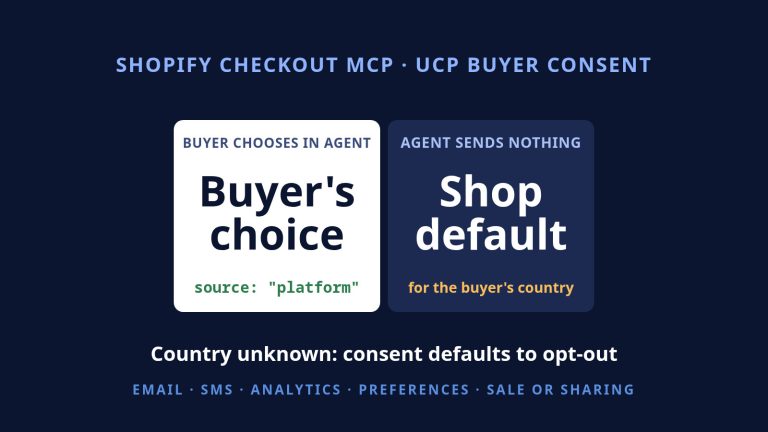
The unit is the trap. The duration_unit row says “Defaults to month [month] if unspecified”, and PPC Land drew the consequence: “a merchant who submits only the number 4 for a television would be stating a four-month warranty”. The same row is labelled “Required for Products”, which sits oddly next to a default, and says that for Bill 29 the unit must be year. That row does not make the attribute itself required: the notice calls providing it “optional”. A missing value falls back to a default, as in Shopify’s agent checkout: when the agent sends nothing, the shop’s country default applies. PPC News Feed reported the spec page on Oct. 16.
What Google’s notice doesn’t say
PPC Land listed these open questions on Oct. 25; checked against the notice, four hold. The notice is dated “October, 2026”, with no day, and it leaves open:
- The display date. The only wording is “later this year”, so any month is a guess.
- Scope of display. The notice’s title says “products targeting Canada”, while the law covers Quebec consumers. It does not say whether the duration will show only to Quebec shoppers or across Canada.
- Rendering. How the duration will look on an ad or a free listing is not described.
- Enforcement. The notice calls the attribute “optional” and names no disapproval or limit for products without it.
It does say who carries the risk: merchants “are ultimately responsible for ensuring that their product data and on-site disclosures comply with all applicable local laws, including Québec’s Bill 29.” Until display starts, a submitted value does not appear on Google’s ads or free listings.
What the feed does not cover
The feed field only reaches Google’s surfaces: Shopping ads and free listings. OPC’s rule also applies to the merchant’s own site, and for online or phone sales Osler says the merchant “must indicate the duration of the legal warranty in the contract provided to the consumer after the conclusion of the sale”. That is Osler’s summary, not the text of the Act or the Regulation.
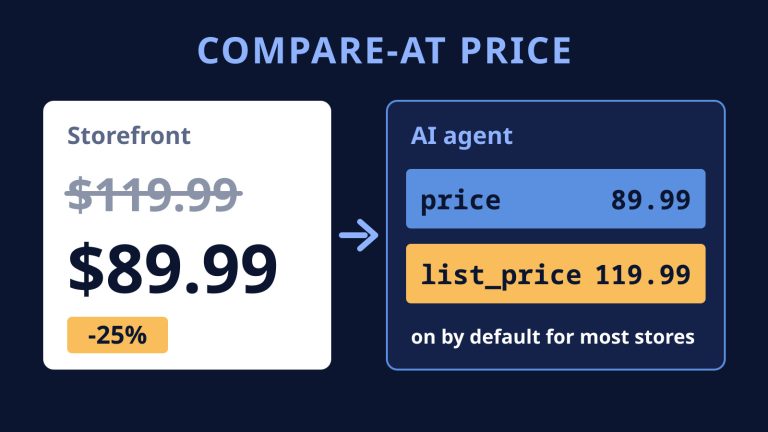
Markup is not covered. The spec lists “Schema.org property: No” and “Repeated field: No”, names text or XML feeds and the Merchant API resource as the ways to send the value, and says nothing about warranty information in on-page markup. For another case of product data reaching a surface outside the store, see compare-at prices Shopify passes to AI agents by default.
For a catalog with covered categories, the feed and product page come down to three checks: add the attribute, make sure every value ends in :year, and confirm the term sits near the price on the product page.