Adobe said on October 29 that in September, AI traffic to US retail sites generated 83% higher revenue per visit than non-AI traffic and converted 90% better. The figures rest on “direct transactions online, covering over 1 trillion visits to U.S. retail sites, 100 million SKUs and 18 product categories.” The post does not say what share of total visits or revenue AI accounts for.
What did Adobe report for September?
The headline numbers are in Adobe’s blog post by Vivek Pandya. Search Engine Land confirms the same core figures. The table keeps each claim in Adobe’s own wording.
| Metric (September 2026) | AI traffic vs non-AI traffic | Adobe’s wording |
|---|---|---|
| Revenue per visit | 83% higher | “the largest gap observed this year” |
| Conversion (visits that become purchases) | 90% better | “the highest level Adobe has observed to date” |
| Time on site | 73% more | “spending 73% more time on site” |
| Pages viewed | 25% more | “viewing 25% more pages per visit” |
| Add-to-cart rate | 53% higher | “adding products to their carts at a 53% higher rate” |
AI traffic itself “grew 71% year-over-year” in September, “measured by users clicking on a link”. Adobe describes non-AI traffic as “(such as email, paid search, and social)”. Just over a year earlier, the picture was reversed: “in August 2025, AI traffic converted 9% worse.” Adobe adds that “in just 12 months, AI traffic has gone from being worth less than half of a typical visit to nearly twice as much.”
The holiday numbers are forecasts, not measurements. Adobe projects AI traffic to rise 159% year over year on Thanksgiving, 95% on Black Friday and 88% on Cyber Monday, and expects the revenue-per-visit advantage to double this season.
What does Adobe count as AI traffic?
Adobe’s post gives one definition, in a parenthetical: AI traffic is “measured by users clicking on a link.” It does not say how a visit is classified as AI, which platforms are included, or what share of total retail visits or revenue the segment represents. Search Engine Land says AI referrals “include visits from clicks on links in AI platforms”, which restates the idea and still leaves the method open.
Adobe mentions a companion survey of more than 5,000 US respondents, conducted in September, but the post publishes no survey results.
Adobe explains the performance gap with intent: “By the time shoppers click through to a retailer site, many are ready to purchase.” That is a description of who arrives, not a test of what AI referrals do to conversion.
Does the October 7 ChatGPT change touch these figures?
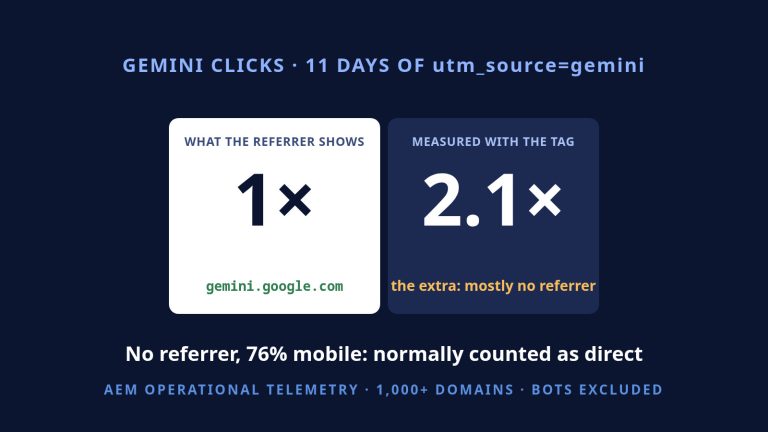
Adobe’s figures are for September. OpenAI released GPT-6 and Intelligent UI on October 7. In our report on the missing ChatGPT UTM tag, Adobe’s Cedric Huesler said GPT-6 opens links without a tag or a referrer, and on the ChatGPT-heavy pages he sampled, most of the visits ChatGPT lost showed up as Direct. He called it a few days of sampled data and said it might be a bug.
Adobe’s October 29 post does not mention that change or say whether it affects its figures. Only the dates are established: September data, October 7 change.
What should you build before Black Friday?
Your own AI segment, compared against Direct. Adobe’s number is an aggregate across US retail sites that you cannot inspect. Your store’s ratio could differ, and in our October report many ChatGPT clicks arrived without a tag after October 7.
- Create a segment from the sources and referrers you can see. GA4’s AI Assistant default channel picks up visits whose referrer matches its list of AI assistants.
- Tag the links you control. A UTM builder keeps the tags consistent across campaigns, newsletters and partner posts.
- Report the AI segment next to Direct, with revenue per visit and conversion rate for both.
- Annotate October 7 on every trend line, so a drop in tagged AI visits is not read as lost demand.
Then compare your own revenue per visit for the segment against the rest of your traffic. If your AI premium lands near Adobe’s 83%, good. If it does not, you have learned something about your store that a national aggregate could never tell you.